A Bond of Love, A Gift of Life: Husband Donates Kidney to Wife Ahead of Karwa Chauth
 PNI News
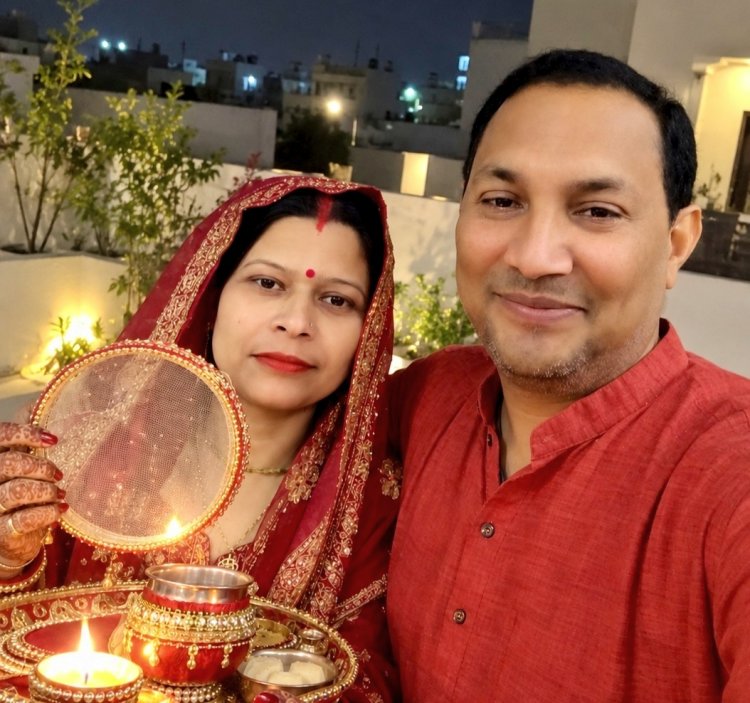
The transplant was ABO-incompatible, involving a donor and recipient with different blood groups
The procedure required specialised preparation and close medical monitoring to help reduce the risk of organ rejection.
Greater Noida: When 32-year-old Rubi’s kidneys failed, and she became dependent on regular dialysis, her husband, Sanjay, 46, stepped forward to give her something more precious than any festival gift, a chance at a new life. Ahead of Karwa Chauth, a festival that celebrates the bond between husband and wife, Sanjay donated his kidney to Rubi. The transplant was successfully performed at ShardaCare - Healthcity, offering the couple renewed hope as Rubi began her recovery.
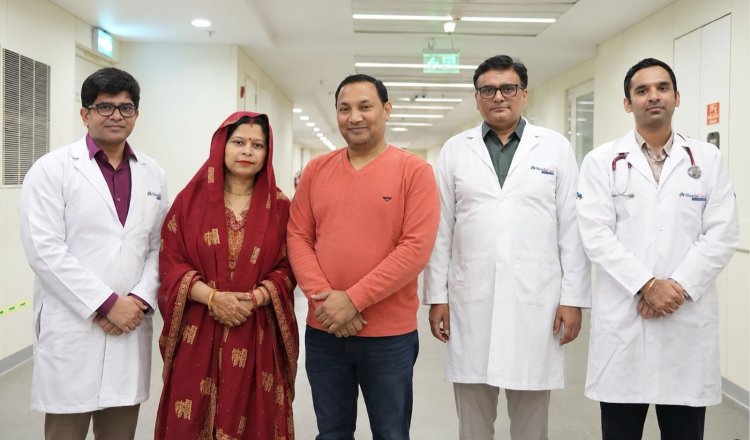
The transplant required specialised preparation because the couple had different blood groups. Dr Anil Sharma (Director - Kidney Transplant & Urology), Dr Ahmed Kamaal (Director - Kidney Transplant & Urology) and Dr Kunal Raj Gandhi (Director - Nephrology) performed the transplant after a comprehensive evaluation. Rubi, whose blood group is B positive, received a kidney from Sanjay, whose blood group is A positive. To ensure a successful match, she received a specialised immune-targeted drug (rituximab) as part of a desensitisation process to prepare her body for the new organ and prevent rejection.
Dr Anil Sharma commented, “Sanjay’s decision to donate his kidney gave Rubi an opportunity to move beyond regular dialysis. Laparoscopic donor nephrectomy allowed us to retrieve the kidney through a minimally invasive approach, with careful attention to the donor’s safety and recovery.”
Dr Ahmed Kamaal added, “Rubi and Sanjay had different blood groups, making this a more complex transplant. Rubi underwent specialised desensitisation treatment with rituximab before receiving her husband’s kidney. This preparation was important to help reduce the risk of rejection and support a successful transplant.”
Dr Kunal Raj Gandhi further added, “Rubi had been dependent on regular haemodialysis because of kidney failure. Following the transplant, her kidney function improved, with serum creatinine reaching 0.70 mg/dl during her hospital stay. Continued medication, regular kidney function tests and follow-up will be essential to protect the transplanted kidney.”
Expressing her gratitude, Rubi said, “Going through kidney dialysis was a difficult phase of my life. My husband’s decision to donate his kidney has given me new hope and a chance to look forward to life beyond dialysis. It is difficult to put into words what his gesture means to me. This Karwa Chauth, I feel especially grateful to have a partner who stood by me through one of the most challenging times in my life. I am also thankful to the team of doctors.”
Sharing his experience, Sanjay said, “When I saw Rubi going through dialysis, I wanted to do whatever I could to help her. Donating my kidney was a decision I made with the hope that she could move towards a healthier life. Seeing her recover has given me immense relief, and I am grateful that we can look ahead with renewed hope.”
Rubi’s Kidney function improved and she was discharged in a clinically stable condition. Sanjay also recovered well after the laparoscopic left donor nephrectomy and was discharged in stable condition.
This Karwa Chauth, Sanjay’s decision to donate his kidney to Rubi goes beyond tradition, offering his wife the precious gift of a new chance at life. Their story highlights the role of living-donor kidney transplantation in treating end-stage kidney disease and the strength of a bond that stands firm through life’s most difficult moments. It is a reminder that medical expertise and human compassion can come together to bring hope when it is needed most.